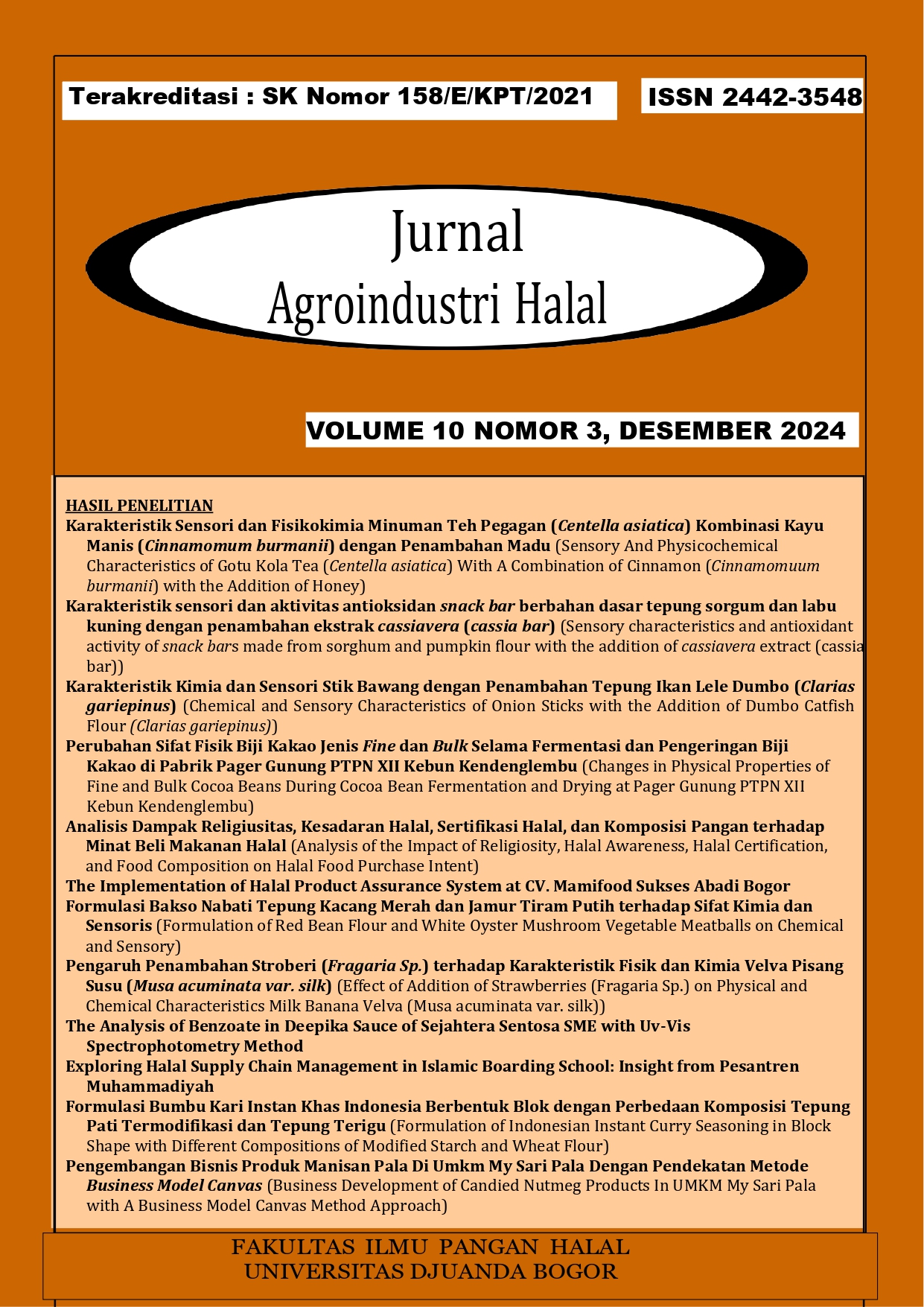
Exploring Halal Supply Chain Management in Islamic Boarding School: Insight from Pesantren Muhammadiyah
DOI:
https://doi.org/10.30997/jah.v10i3.12836Keywords:
Halal Supply Chain Management, Islamic Boarding School, Muhammadiyah, TasikmalayaAbstract
Islamic boarding schools as traditional Islamic educational institutions have an important role in building a healthy and sustainable halal ecosystem. Islamic boarding schools must also ensure that the supply chain from upstream and downstream is in accordance with Halal Supply Chain Management (HSCM). Several HSCM applications start from supplier selection, production processes, storage, to distribution to consumers. The aim of this research is to analyze the application of HSCM and propose an HSCM model in Islamic boarding schools. This research includes qualitative research. Data was collected using interview, observation and documentation techniques and then analyzed using an inductive approach. This research was conducted at the Al-Furqon Muhammadiyah Islamic Boarding School, Tasikmalaya, taking 12 respondents. Respondents were selected based on their relationship with HSCM in Islamic boarding schools, from Islamic boarding school managers, teachers, kitchen managers, to students. This research shows that the implementation of halal supply chain management at the Al Furqon Muhammadiyah Islamic Boarding School, Tasikmalaya Regency is quite good with restrictions and education for proper and halal consumption. Providing nutritionists and halal food as well as a halal warehouse are needed to build a halal ecosystem in Islamic boarding schools. Providing halal certified raw materials also needs to be considered. Apart from that, funding through productive waqf can also be done to support the halal ecosystem in Islamic boarding schools.
References
Al-Furqon, P. P. (2023). Sejarah Pondok Pesantren Al-Furqon. Pesantren Muhammadiyah Al-Furqon Tasikmalaya. https://alfurqon.id/sejarah/
Annisa, A. A. (2019). Kopontren dan Ekosistem Halal Value Chain. Jurnal Ilmiah Ekonomi Islam, 5(01), 1. https://doi.org/10.29040/jiei.v5i01.398
Annur, C. M. (2022). Ada 26.975 Pesantren di Indonesia, di Provinsi Mana yang Terbanyak? Databoks. https://databoks.katadata.co.id/datapublish/2022/01/31/ada-26975-pesantren-di-indonesia-di-provinsi-mana-yang-terbanyak
Ardiantono, D. S., Baihaqi, I., Sugihartanto, M. F., Nasution, A. H., Ardyansyah, G. D., & Mustafa, M. U. Al. (2021). Literature analysis of halal supply chain management in Micro, Small and Medium Enterprises (MSMEs). 202(Iconbmt), 316–321.
Aziz, Y. A., & Chok, N. V. (2013). The role of halal awareness, halal certification and marketing components in determining halal purchase intention among Non-Muslims in Malaysia: A Structural Equation Modelling Approach. Journal of International Food & Agribusiness Marketing, 25(1), 1–23. https://doi.org/10.1080/08974438.2013.723997
Fadhilah, L. N., & Syamsuri, S. (2022). DEPICTHING HALAL VALUE CHAIN AT THE GONTOR ALUMNI PESANTREN FORUM (FPAG). MIQOT: Jurnal Ilmu-Ilmu Keislaman, 46(2). https://doi.org/10.30821/miqot.v46i2.980
Fauzi, A., & Arif, M. (2020). Analisis Manajemen Badan Usaha Milik Pesantren (BUMP) Dalam Pemenuhan Kebutuhan Santri di Pesantren Hubulo Gorontalo. Al-Buhuts, 16(1), 67–79.
Fawa’id, M. W. (2022). Pesantren dan Ekosistem Halal Value Chain. Jurnal At-Tamwil: Kajian Ekonomi Syariah, 4(2), 166–184.
Firdaus, A., Azmi, M. N., Farahanim, N., Radzi, A., & Samicho, Z. (2016). Halal Food Warehouse: Challenges and Solutions. J. Appl. Environ. Biol. Sci, 6(11S).
Hesse-Biber, Nagy, S., & Leavy, P. (2011). The Practice of Qualitative Research: Second Edition (Second). SAGE Publications.
Hussain, I., Rahman, S. ur, Zaheer, A., & Saleem, S. (2016). Integrating factors influencing consumers’ halal products purchase: Application of theory of reasoned action. Journal of International Food & Agribusiness Marketing, 28(1), 35–58. https://doi.org/10.1090/08974438.2015.1006973
Ismail, A. G., Ali, M., & Noor, M. (2013). Halal Finance and Halal Foods: Are They Falling Apart ? Economica, 12(3).
Khan, M. I., Haleem, A., & Khan, S. (2018). Defining Halal Supply Chain Management. Supply Chain Forum, 19(2), 122–131. https://doi.org/10.1080/16258312.2018.1476776
Kristiana, B. V., Indrasari, A., & Giyanti, I. (2020). Halal supply chain management dalam optimalisasi penerapan sertifikasi halal UMKM. Performa: Media Ilmiah Teknik Industri, 19(2), 113–120. https://doi.org/10.20961/performa.19.2.46379
Lami’, D., & Hapsin, A. (2019). Manajemen Badan Usaha Milik Pesantren (BUMP) Maslakul Huda Kajen Pati. Jurnal Iqtisad: Reconstruction of Justice and Welfare for Indonesia, 6(2), 197–223.
Limanseto, H. (2022). Penguatan Ekosistem Halal Value Chain untuk Mendukung Ekonomi Syariah dan Industri Halal. Kementerian Koordinator Bidang Perekonomian Republik Indonesia.
Mawardi, A. S., Marlina, L., & Zahra, Q. S. A. (2022). TABDZIR (WASTE) REDUCTION USING LEAN MANUFACTURING APPROACH IN FADHILA AQIQAH TASIKMALAYA PRODUCTION PROCESS MEMINIMASI TABDZIR (WASTE) DENGAN PENDEKATAN LEAN MANUFACTURING PADA PROSES PRODUKSI FADHILA AQIQAH TASIKMALAYA. JESKaPe: Jurnal Ekonomi Syariah, Akuntansi Dan Perbankan, 6(2).
Muhlisin, Hilal, S., & Bahrudin, Moh. (2022). Analisis Literasi Ekonomi Syariah Dan Ekosistem Halal Value Chain Terhadap Perkembangan Ekonomi Syariah Pondok Pesantren Di Provinsi Lampung. Jurnal Ilmiah Ekonomi Islam, 8(3).
Muhtadi, R. (2023). Sejarah perkembangan jaminan halal di Indonesia. In B. Almas (Ed.), Membangun Ekosistem Industri Halal di Indonesia (pp. 13–30). PT Global Eksekutif Teknologi.
Mumfarida, M., & Dzikrulloh, D. (2021). Implementasi Halal Pada Proses Produksi Bisnis Pesantren (Multicase Studi). Izdihar: Jurnal Ekonomi Syariah, 1(2). https://doi.org/10.32764/izdihar.v1i2.2147
Mustajib, M., & Fitri, A. Z. (2023). Implementasi Manajemen Strategis dalam Organisasi Non Profit (ONP) Studi Pembiayaan Pondok Pesantren Fathul ‘Ulum Kwagean Kediri. Dirasah, 6(1), 81–92.
Musthofa. (2015). Kedatangan Islam dan Pertumbuhan Pondok Pesantren di Indonesia Perspektif Filsafat Sejarah. An-Nuha, 2(1).
Mutmainah, L. (2018). The Role of Religiosity, Halal Awareness, Halal Certification, and Food Ingredients on Purchase Intention of Halal Food. IIHTIFAZ: Journal of Islamic Economics, Finance, and Banking, 1(1), 33. https://doi.org/10.12928/ijiefb.v1i1.284
Ngah, A. H., Zainuddin, Y., & Thurasamy, R. (2010). Modelling of Halal Warehouse Adoption Using Partial Least Squares. International Journal of Contemporary Business Management, 1(1).
Ningsih, I. W., Basri, H., & Suhartini, A. (2023). HISTORY AND DEVELOPMENT OF PESANTREN IN INDONESIA. JURNAL EDUSCIENCE, 10(1). https://doi.org/10.36987/jes.v10i1.3392
Nor, M. R. M., Latif, K., Ismail, M. N., & Nor, M. N. M. (2016). Critical success factors of halal supply chain management from the perspective of Malaysian halal food manufacturers. Arabian Journal of Business and Management Review (Nigerian Chapter), 4(1), 1–23.
Peraturan Pemerintah Republik Indonesia Nomor 31 Tahun 2019 Tentang Peraturan Pelaksanaan Undang-Undang Nomor 33 Tahun 2014 Tentang Jaminan Produk Halal, Pub. L. No. 31 (2019).
Romli, M. (2022). Halal Value Chain Development Strategy From Islamic Boarding Schools. International Muktamar for Arabic Language and Islamic Studies, 1(2).
Setiawan, H. C. B. (2019). Kontribusi Praktik Kewirausahaan di Pondok Pesantren Entrepreneur Mukmin Mandiri Waru, Sidoarjo. JRE: Jurnal Riset Entrepreneurship, 2(2), 8–18.
Sugiyono. (2015). Metode Penelitian Kuantitatif, Kualitatif, dan Kombinasi (Mixed Methods). Alfabeta.
Sukoso, Wiryawan, A., Kusnadi, J., & Sucipto. (2020). Ekosistem Industri Halal (A. A. Prihanto, M. I. Sukarna, & H. Harimurti, Eds.). Departemen Ekonomi dan Keuangan Syariah Bank Indonesia.
Sunardi, S., & Sohib, S. (2020). Implementasi Manajemen Kewirausahaan dalam Meningkatkan Life Skill Santri di Pondok Pesantren Fathul Ulum Diwek Jombang. Al-Idaroh: Jurnal Studi Manajemen Pendidikan Islam, 4(2), 210–226. https://doi.org/10.54437/alidaroh.v4i2.167
Suwanto, S., & Gunawan, I. (2021a). Ekosistem Pesantren dalam Mewujudkan Manajemen Halal Supply Chain Menuju Madani Society 5.0. Mabny : Journal of Sharia Management and Business, 1(02). https://doi.org/10.19105/mabny.v1i02.5198
Suwanto, S., & Gunawan, I. (2021b). Ekosistem Pesantren dalam Mewujudkan Manajemen Halal Supply Chain Menuju Madani Society 5.0. Mabny : Journal of Sharia Management and Business, 1(02), 116–128. https://doi.org/10.19105/mabny.v1i02.5198
Tieman, M. (2011). The application of Halal in supply chain management: In-depth interviews. Journal of Islamic Marketing, 2(2). https://doi.org/10.1108/17590831111139893
Tieman, M., van der Vorst, J. G. A. J., & Ghazali, M. C. (2012). Principles in halal supply chain management. Journal of Islamic Marketing, 3(3). https://doi.org/10.1108/17590831211259727
Tieman, M., Vorst, Jj. G. A. J. van der V., & Che, M. (2013). Principles in halal supply chain management. Journal of Islamic Marketing, 3(3), 2177–2243. https://doi.org/10.1108/17590831211259727
Waskito, D. (2015). Pengaruh sertifikasi halal, kesadaran halal, dan bahan makanan terhadap minat beli produk makanan halal (studi pada mahasiswa Muslim di Yogyakarta). Universitas Negeri Yogyakarta.
Wijaya, H. M., Deswantoro, G., & Hidayat, R. (2021). Analisis Perencanaan Supply Chain Management (Scm) Pada Pt. Kylo Kopi Indonesia. Jurnal Ekonomi Manajemen Sistem Informasi, 2(6), 795–806. https://doi.org/10.31933/jemsi.v2i6.653
Wildan Fawa, M. (2022). Pesantren dan Ekosistem Halal Value Chain Islamic Boarding Schools and Halal Value Chain Ecosystem. 166 | Jurnal At-Tamwil: Kajian Ekonomi Syariah, 4(2). https://doi.org/10.33367/10.33367/at.v4i2.1471
Zaenudin, A. (2018). Model Manajemen Unit Bisnis Pesantren. Jurnal Pengembangan Wiraswasta, 20(1), 11. https://doi.org/10.33370/jpw.v20i1.179
Downloads
Published
How to Cite
Issue
Section
License
Copyright (c) 2024 Qiny Shonia Az Zahra, Lu'liyatul Mutmainah, Listia Andani, Dian Friantoro

This work is licensed under a Creative Commons Attribution-ShareAlike 4.0 International License.
Authors who publish with Jurnal Agroindustri Halal agree to the following terms:
- Authors retain copyright and grant the journal right of first publication with the work simultaneously licensed under a Creative Commons Attribution 4.0 International License that allows others to share the work with an acknowledgement of the work's authorship and initial publication in Jurnal Agroindustri Halal.
- Authors are able to enter into separate, additional contractual arrangements for the non-exclusive distribution of the journal's published version of the work (e.g., post it to an institutional repository or publish it in a book), with an acknowledgement of its initial publication in Jurnal Agroindustri Halal.
- Authors are permitted and encouraged to post their work online (e.g., in institutional repositories or on their website) prior to and during the submission process, as it can lead to productive exchanges, as well as earlier and greater citation of published work