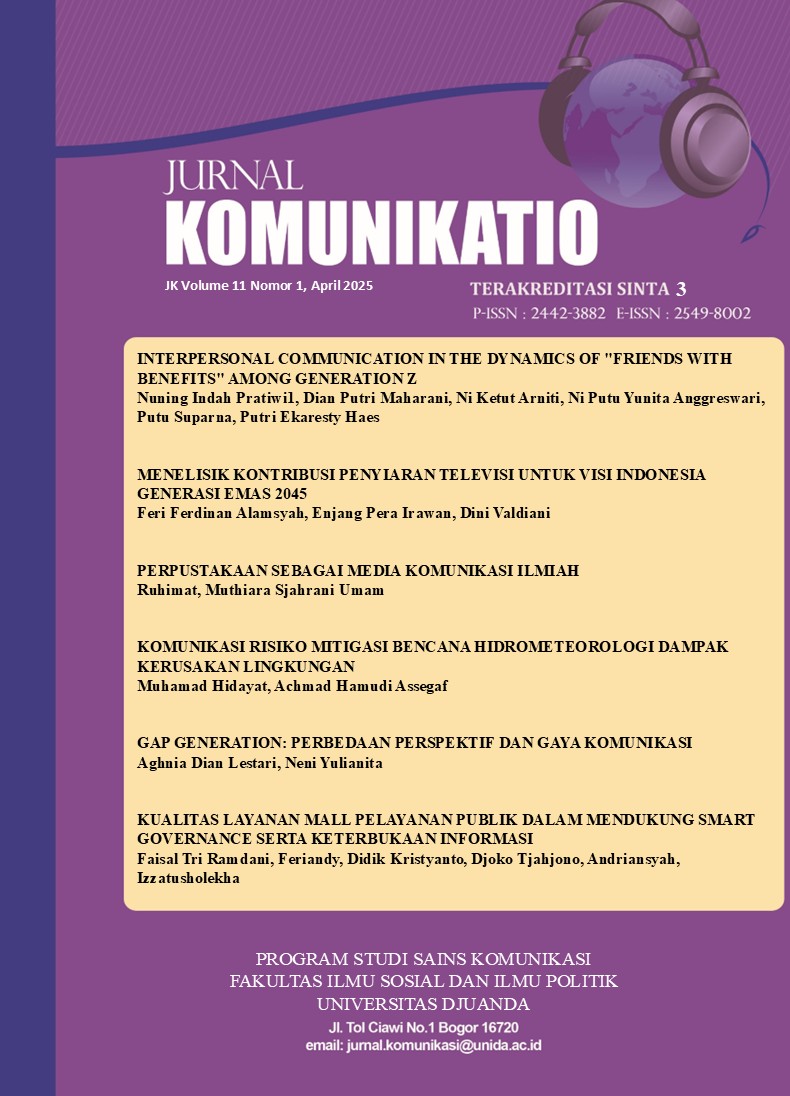
Interpersonal Communication In The Dynamics Of "Friends With Benefits" Among Generation Z
DOI:
https://doi.org/10.30997/jk.v11i1.16394Keywords:
Friends with benefits, Interpersonal communication, Social penetration theoryAbstract
This research aims to analyze the dynamics of interpersonal communication in friends with benefits relationships among Generation Z in the city of Denpasar. Friends with benefits relationships have become an increasingly common phenomenon in the modern era, especially among Generation Z, who are known for their more liberal approach to interpersonal relationships. With a qualitative approach and case study method, this research analysis the experiences of individuals involved in friends with benefits relationships through in-depth interviews. The focus of the research is to understand the role of interpersonal communication in building, maintaining, and managing friends with benefits relationships, including the social penetration process, as explained in the penetration theory, which is clearly seen in how individuals gradually share personal information, starting from more superficial aspects to more intimate ones. The research findings suggest the need for education on effective communication and awareness of social stigma, as well as the importance of maintaining a balance between personal freedom and emotional responsibility for a healthy relationship.
References
Abdurrahman, A. G., Putri, C. N. D., & Irwansyah, I. (2021). Implementasi Teori Penetrasi Sosial pada Pengguna Aplikasi Tinder. Jurnal Lensa Mutiara Komunikasi, 5(2), 24–38. doi.org/10.51544/jlmk.v5i2.1661
Adhani, A. F., & Aripudin, A. (2024). Perspektif Generasi Z di Platform X Terhadap Penurunan Angka Pernikahan di Indonesia. J-KIs: Jurnal Komunikasi Islam, 5(1), 185–198.
Adlini, M. N., Dinda, A. H., Yulinda, S., Chotimah, O., & Merliyana, S. J. (2022). Metode penelitian kualitatif studi pustaka. Jurnal Edumaspul, 6(1), 974–980.
Anindasari, A. P., & Tranggono, D. (2023). Pengaruh Live Streaming TikTok Terhadap Keputusan Pembelian Produk Skintific Pada Generasi Z Pengikut Akun @skintific_id. Jurnal Ilmiah Wahana Pendidikan, 9(22), 13–26. doi.org/10.5281/zenodo.10077520
Anjani, A., Ratnamulyani, I. A., & Kusumadinata, A. A. (2018). Penggunaan Media Komunikasi Whatsapp Terhadap Efektivitas Kinerja Karyawan. . Jurnal Komunikatio, 4(1), 41–50.
Ardianty, S. (2024). Komunikasi Interpersonal melalui Intimate Friendship Orang Tua dan Anak dalam Mencegah Kecenderungan Bunuh Diri. Jurnal Common, 8(1), 73–86.
Baiturohim, M. (2021). Implikasi Penarikan Diri Amerika Serikat dari Joint Comprehensive Plan of Action (JCPOA). Dauliyah: Journal of Islam and International Affairs, 6(2), 279–312.
Christiani, L. C., & Ikasari, P. N. (2020). Generasi Z dan pemeliharaan relasi antar generasi dalam perspektif budaya Jawa. Jurnal Komunikasi Dan Kajian Media, 4(2), 84–105.
Fadli, M. R. (2021). Memahami desain metode penelitian kualitatif. Humanika, Kajian Ilmiah Mata Kuliah Umum, 21(1), 33–54. doi.org/10.21831/hum.v21i1
Fitriyadi, M. Y., Rahman, M. R., Asshidiqi, M. R. A., Ilham, M. A., Aibina, O. I., Hesda, N., & Al Fayyedh, F. (2023). pengaruh dunia IT terhadap perilaku remaja generasi z. Religion: Jurnal Agama, Sosial, Dan Budaya, 2(2), 21–37.
Fitriyani, A. D., & Iswahyuningtyas, C. E. (2020). Online Dating dalam Relasi Percintaan Friends with Benefit di Media Sosial Whisper. Jurnal Ilmu Komunikasi, 18(3), 340–351. doi.org/10.31315/jik.v18i3.3404
Habibah, A. F., Shabira, F., & Irwansyah, I. (2021). Pengaplikasian Teori Penetrasi Sosial pada Aplikasi Online Dating. Jurnal Teknologi Dan Sistem Informasi Bisnis, 3(1), 44–53. doi.org/10.47233/jteksis.v3i1.183
Kartika, E. D., & Cipta, D. A. S. (2023). Work Based Learning Sebagai Upaya Meningkatkan Kemampuan Public Speaking Mahasiswa Pendidikan Matematika. Jurnal Ilmiah Matematika Realistik (JI-MR, 4(1), 41–47.
Kustiawan, W., Lubis, I. Y., Natasya, Sartika, I., Dewi, F. K., Supriadi, T., & Anggianto, I. (2022). Teori Penetrasi Sosial. Edukasi Nonformal, 3(2), 1–10.
Martoredjo, N. T. (2024). Keterampilan mendengarkan secara aktif dalam komunikasi interpersonal. Humaniora, 5(1), 501–509.
Muafiah, E., Puspita, A. R., & Damayanti, V. V. W. (2021). Gender Equality and Social Inclusion (GESI) Pada Dua Sekolah Inklusi Di Ponorogo. Musãwa Jurnal Studi Gender Dan Islam, 19(2), 141–156.
Nasution, T., Ariani, E., & Emayanti, M. (2022). Pengaruh Penggunaan Gadget Terhadap Kemampuan Interaksi Sosial Pada Anak Usia Dini. Journal of Science and Social Research, 5(3), 588–594.
Pratiwi, N. I., & Wedananta, K. A. (2019). Komunikasi Interpersonal Dalam Kelompok Mahasiswa Mengenai Gaya Psychedelic Di Bali. Jurnal Ilmiah Dinamika Sosial, 3(1), 37–55.
Puspitasari, I., & Aprilia, M. P. (2022). Penetrasi Sosial dalam Mencari Pasangan Pada Aplikasi Kencan Online Bumble. MUKASI: Jurnal Ilmu Komunikasi, 1(3), 196–211. doi.org/10.54259/mukasi.v1i3.986
Ramadhani, S. W., & Sukardani, P. S. (2023). Pemunculan Self Disclosure Dalam Relasi Friends With Benefit (Studi Fenomenologi Perempuan Muda Surabaya). . The Commercium, 7(2), 87–99.
Reza Ahmad, N., & Delliana, S. (2024). Self Disclosure Pria Pelaku Friends With Benefit (FWB) Pada Komunitas Friends With Benefit Di Twitter. Eligible: Journal of Social Sciences, 3(1), 357–370. doi.org/10.53276/v3i1.125
Romadona, M. R., & Setiawan, S. (2020). Komunikasi Organisasi Dalam Fenomena Perubahan Organisasi Di Lembaga Penelitian Dan Pengembangan Communication of Organizations in Organizations Change’S Phenomenon in Research and Development Institution. Jurnal Pekommas, 5(1), 91–104.
Shandery, T., Hosea, A., Kontandengan, T., Tanu, G. M., & Aipassa, H. S. (2023). Peningkatan Kesadaran Dan Pemahaman Tentang’friends With Benefits’di Asrama Seminari Bethel Indonesia: Pendekatan Etika Kristen Dan Psikologis. Pneumata: Jurnal Pengabdian Kepada Masyarakat, 5(2), 94–102.
Yunawati, Y., Kurniawati, N. K., & Widyaningtyas, M. D. (2023). Komunikasi Interpersonal Pustakawan Terhadap Kepuasan Pemustaka Librarian Interpersonal Communication On User Satisfaction (Vol. 9).
Zafarani, L. R., & Fatanti, M. N. (2023). Konstruksi Makna Friend with Benefit (FWB) di Kalangan Mahasiswa Kota Malang dari Tinjauan Fenomenologi Sosial. MUKADIMAH: Jurnal Pendidikan, Sejarah, Dan Ilmu-Ilmu Sosial, 7(2), 345–361. doi.org/10.30743/mkd.v7i2.7586
Downloads
Published
How to Cite
Issue
Section
License
Copyright (c) 2025 JURNAL KOMUNIKATIO

This work is licensed under a Creative Commons Attribution-ShareAlike 4.0 International License.
Authors who publish with Jurnal Komunikatio agree to the following terms:
- Authors retain copyright and grant the journal right of first publication with the work simultaneously licensed under a Creative Commons Attribution 4.0 International License that allows others to share the work with an acknowledgement of the work's authorship and initial publication in Jurnal Komunikatio.
- Authors are able to enter into separate, additional contractual arrangements for the non-exclusive distribution of the journal's published version of the work (e.g., post it to an institutional repository or publish it in a book), with an acknowledgement of its initial publication in Jurnal Komunikatio.
- Authors are permitted and encouraged to post their work online (e.g., in institutional repositories or on their website) prior to and during the submission process, as it can lead to productive exchanges, as well as earlier and greater citation of published work