
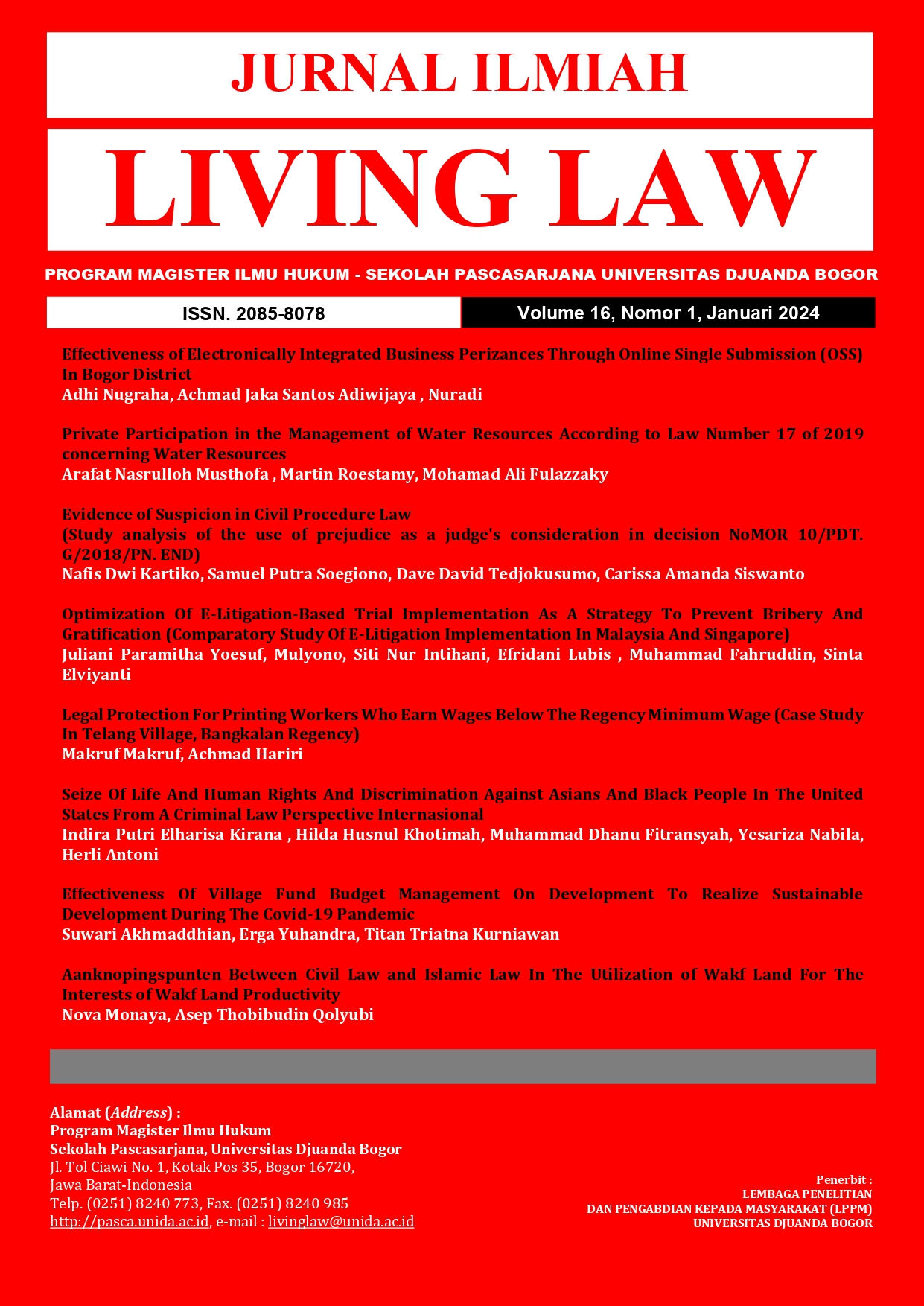
Optimization Of E-Litigation-Based Trial Implementation As A Strategy To Prevent Bribery And Gratification (Comparatory Study Of E-Litigation Implementation In Malaysia And Singapore)
DOI:
https://doi.org/10.30997/jill.v16i1.11360Keywords:
E-litigasi, Perbandingan Hukum , Pencegahan Suap dan GratifikasiAbstract
The E-Court system in Indonesia is an embodiment of the principles of simple, fast and low-cost justice, as well as technological transformation in the case administration system in court. The E-Court system has been running in all courts in Indonesia since 2018, then in 2019 the Supreme Court implemented the E-Litigation system, namely electronic-based trials and the arrangements continue to be refined, especially with the issuance of Supreme Court Regulation Number 7 of 2022 concerning Amendments to Supreme Court Regulation Number 1 2019 concerning Electronic Administration of Cases and Trials in Court. By implementing E-Litigation, apart from making trials easier and saving time, it will of course also reduce the intensity of meetings with the parties so that bribery and gratification do not occur in the judicial environment. Seeing that the implementation of the electronic trial system in Indonesia is still relatively new, it is necessary to compare with other countries such as Malaysia (2011) and Singapore (2015) which first implemented both E-Court and E-Litigation to see what things need to be optimized in implementation of an electronic trial system so that it can prevent the practice of bribery and gratification. The research methodology used in this research is normative-empirical legal research. The problems to be studied are: 1) What is the trial mechanism through the E-litigation system in Indonesia, Malaysia and Singapore? 2) How to optimize the implementation of e-litigation based trials in reducing bribery and gratification?
Downloads
References
Buku:
Ali, Mohammad. 2014. Metodologi & Aplikasi Riset Pendidikan. Jakarta: PT Bumi Aksara.
Hakim, Muh. Ridha. 2019. Implementasi E-Court di Mahkamah Agung Menuju Peradilan Yang Modern. Jakarta: Prenadamedia Group.
Mahkamah Agung. 2018. Laporan Tahunan Mahkamah Agung RI Tahun 2018. Jakarta: Mahkamah Agung Republik Indonesia.
Pendidikan Anti-Korupsi Untuk Perguruan Tinggi, Kementerian Pendidikan dan Kebudayaan RI Direktorat Jenderal Pendidikan Tinggi, Kementerian Pendidikan dan Kebudayaan RI Direktorat Jenderal Pendidikan Tinggi Bagian Hukum Kepegawaian.
Siringoringo, Hotniar. 2005. Pemograman Linear: Seri Teknik Riset Operasi. Yogyakarta: Graha Ilmu.
Syaf, Nur Djannah. 2020. Sistem Pengawasan Lembaga Peradilan: Konsep dan Penerapan Sistem Pengawasan Dini (Early Supervision System) di Mahkamah Agung). Jakarta: Kencana.
Jurnal/Artikel:
Apriliana, Shinta Devi, & Ertien Rining Nawangsari. 2021. Pelatihan dan Pengembangan Sumber Daya Manusia (SDM) Berbasis Kompetensi. Forum Ekonomi, Vol. 23(4).
Ghadas, Zuhairah Ariff Abd. & Rabiatul Adawiyah Mohd Ariffin. 2019. E-Court System in the Civil and Shariah Courts: Malaysia Perspectives. Malaysia: Universiti Sultan Zainal Abidin.
Initihani, Siti Nur. Dkk. 2022. Efektivitas Persidangan Berbasis E-Court Pada Masa Pandemi Covid 19 Pada Pengadilan Negeri Bekasi. VERITAS: Jurnal Program Pascasarjana Ilmu Hukum. Vol. 8(1): 67-81. https://uia.e-journal.id/veritas/article/view/1804.
Website:
Sosialisasi Pencegahan dan Penanggulangan Korupsi, diakses tanggal 3 November 2023, pada:https://www.bapeten.go.id/berita/sosialisasi-pencegahan-dan-penanggulangan-suap dan gratifikasi-120557.
Malaysian Bar, Badan Peguam Malaysia, diakses tanggal 3 November 2023, pada: www.malaysianbar.org.my
SG Court, diakses tanggal 1 Desember 2023, pada: https://www.judiciary.gov.sg/civil/new-rules-of-court-2021
Downloads
Published
Issue
Section
License
Copyright (c) 2023 JURNAL ILMIAH LIVING LAW

This work is licensed under a Creative Commons Attribution-ShareAlike 4.0 International License.
Authors who publish with Jurnal Ilmiah Living Law agree to the following terms:
- Authors retain copyright and grant the journal right of first publication with the work simultaneously licensed under a Creative Commons Attribution 4.0 International License that allows others to share the work with an acknowledgement of the work's authorship and initial publication in Jurnal Ilmiah Living Law.
- Authors are able to enter into separate, additional contractual arrangements for the non-exclusive distribution of the journal's published version of the work (e.g., post it to an institutional repository or publish it in a book), with an acknowledgement of its initial publication in Jurnal Ilmiah Living Law.
- Authors are permitted and encouraged to post their work online (e.g., in institutional repositories or on their website) prior to and during the submission process, as it can lead to productive exchanges, as well as earlier and greater citation of published work